
What are the solutions for travelling alone safely
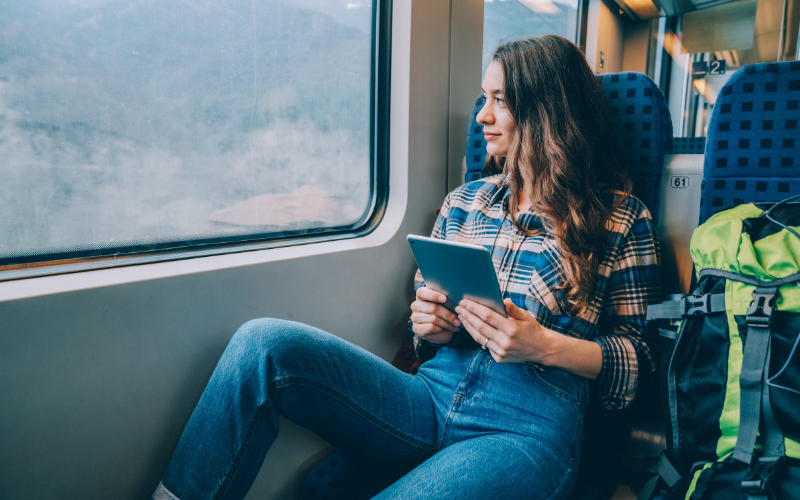
While traveling alone might seem daunting, for many, trying it is adopting it. It’s a way to vacation at your own pace and according to your desires: no need to compromise when you’re alone! If you feel like going on an extreme hike, no one will veto it or sigh with you—and conversely, if you just want to bask in the sun or even relax at your rental, it’s entirely up to you. And vacations can take unexpected turns when you venture off the beaten path. For some, it’s also an opportunity to meet new people: you can find travel companions for a day or for the rest of your vacation.
In short, there are many reasons to travel alone. However, this does mean rethinking your approach to your vacation. And among the factors to consider, the first is safety. While all tourists are potential targets for predators of all kinds, this is even more true when they are alone: for a predator, an isolated prey is the easiest to hunt. And this is especially true for women. Imagine, for example, that a friend announced she was going backpacking solo deep in the jungle: you would probably worry about her too!
In truth, every situation, even the most mundane, presents an element of danger, and women are generally, unfortunately, well aware of this. But finding ourselves in an unfamiliar place makes us much more aware of the risks and more vulnerable. However, this practice shouldn’t be dramatized or demonized. For many solo travelers, everything goes smoothly: it’s simply a matter of being well-prepared and exercising caution . Here is our advice.
Planning your trip
The first step to a successful trip is planning. This is true even when traveling solo—and perhaps even more crucial. First and foremost, it’s important to choose your destination carefully, taking your safety into account. Websites like the Ministry of Foreign Affairs provide advice and warnings about potential risks in each country. Also, use all available resources—from travel guides to forums and blogs—to learn about your destination and get up-to-date, reliable information.
Planning a detailed itinerary is also recommended: yes, it might seem to limit the adventure, and you shouldn’t hesitate to follow your instincts once you’re there, but always prioritize your safety. If you meet people and decide to go with them, verify their trustworthiness as much as possible and inform your loved ones .
Thanks to the internet, you can not only access all sorts of information, but also read reviews from other travelers . This is especially useful when choosing accommodation, for example: prioritize those with positive reviews from other travelers and carefully read their comments. Once you arrive, always lock your accommodation, even when you are there, and keep a close eye on your keys or access cards.
Stay connected
The great advantage for solo globetrotters these days is that they’re never truly alone. There’s a fantastic tool, almost all of us possess, that allows us to stay connected to civilization, both the local scene and to loved ones we left behind. You guessed it: your smartphone.
First and foremost, make sure your smartphone is always charged—and better yet, equip yourself with a long-lasting power bank so you don’t risk being caught off guard by a dead battery. A smartphone is especially recommended since it serves as a map, gives you access to a translator and therefore allows you to communicate, at least in a basic way, and is equipped with a flashlight and even a compass, among other features. It’s the best way to find your way back to civilization when you’re lost. When you consider that the baby boomer generation used to hitchhike to remote countries and that the mail was the only way to get news from them, it’s truly astonishing!
Of course, smartphones have their limitations and don’t work by magic: so avoid areas with weak or nonexistent network coverage whenever possible. In case of an emergency, not being able to contact anyone can have very serious consequences. We’re not just saying this out of distrust of others—though we can’t stress this point enough, especially for women. But in the event of an accident in a remote location, if you’re alone and there’s no one nearby to call for help, only a smartphone can allow you to receive assistance. Unfortunately, it will be useless if you have no network coverage… Getting a local SIM card as soon as you arrive greatly increases your chances of staying connected in all circumstances.
With or without cell service, keep your loved ones informed of your travel plans. It’s best if at least one trusted person is kept up-to-date on your itinerary: include information such as your travel plan and accommodation details. Also, send regular updates to your loved ones to reassure them that everything is alright. While these might seem rather intrusive in everyday life, a location-sharing app can be a smart choice while on vacation, allowing your loved ones to follow your journey in real time.
Speaking of staying connected, it’s also important to remain cautious online. Avoid public computers and internet cafes, as your personal data can be stolen and you could become a victim of fraud. Opt for secure Wi-Fi networks.
Take out travel insurance
Prevention is better than a cure! Travel insurance is essential protection in case of health problems, accidents, or theft. Of course, we hope you never need to use it, but if something goes wrong, it can truly be a lifesaver. Choose insurance that covers medical care, repatriation, lost luggage, and trip cancellation. Read the terms and conditions carefully to understand what’s included and make sure you have your insurer’s emergency contact numbers.
Along the same lines, write down local emergency numbers. Again, we hope you won’t need to contact the police or emergency services, but it’s best to have them handy just in case. Also, learn a few key phrases in the local language to ask for help. This information is essential, so keep it readily available—either on your smartphone or in a notebook. This also allows you to have the person you’re speaking to read it aloud if you don’t know how to pronounce it.
Be vigilant
Yes, this might seem like obvious advice, but as we mentioned earlier, a lone tourist is a much easier target than a couple or a group. So, you need to be extra vigilant when traveling alone. Keep an eye on your belongings, especially in public places and on public transport. Anti-theft bags, padlocks, and seatbelts are all tools that protect your money and important documents. And then, avoid looking like a tourist, osoto speak. Easier said than done, of course, but it’s like wearing a t-shirt that says “pick my pockets.” It’s best to try to blend in—and avoid flashing a wad of cash or displaying any other signs of wealth, like jewelry, so as not to attract the attention of pickpockets.
Be wary of people who approach you. While some may be genuinely friendly, others are likely to try to take advantage of you. Even setting aside the possibility of violence—though again, it’s better to be overly cautious than undunderwaryou simply become a prime target for all kinds of scammers. So, beware of offers that seem too good to be true—they probably are! And avoid fake guides and unofficial taxis: always favor services recommended by other travelers and your sources—hence the importance of doing your research beforehand. Regarding transportation, note the license plate number if you take a taxi, and opt for popular public transport options
Finally, never give personal information to strangers: you don’t know what they’re thinking, however charming they may be ( especially if they’re very charming!). Likewise, never tell strangers that you’re traveling alone. And whatever the circumstances, if you find yourself in a situation that doesn’t inspire confidence, follow your instincts and leave!
Of course, meeting people is also part of a vacation, and traveling solo doesn’t necessarily mean being alone for the entire time. But we strongly recommend that you remain vigilant, especially if you’re a woman. However, making travel companions is also the best way to protect yourself from the dangers that await solitary globetrotters .